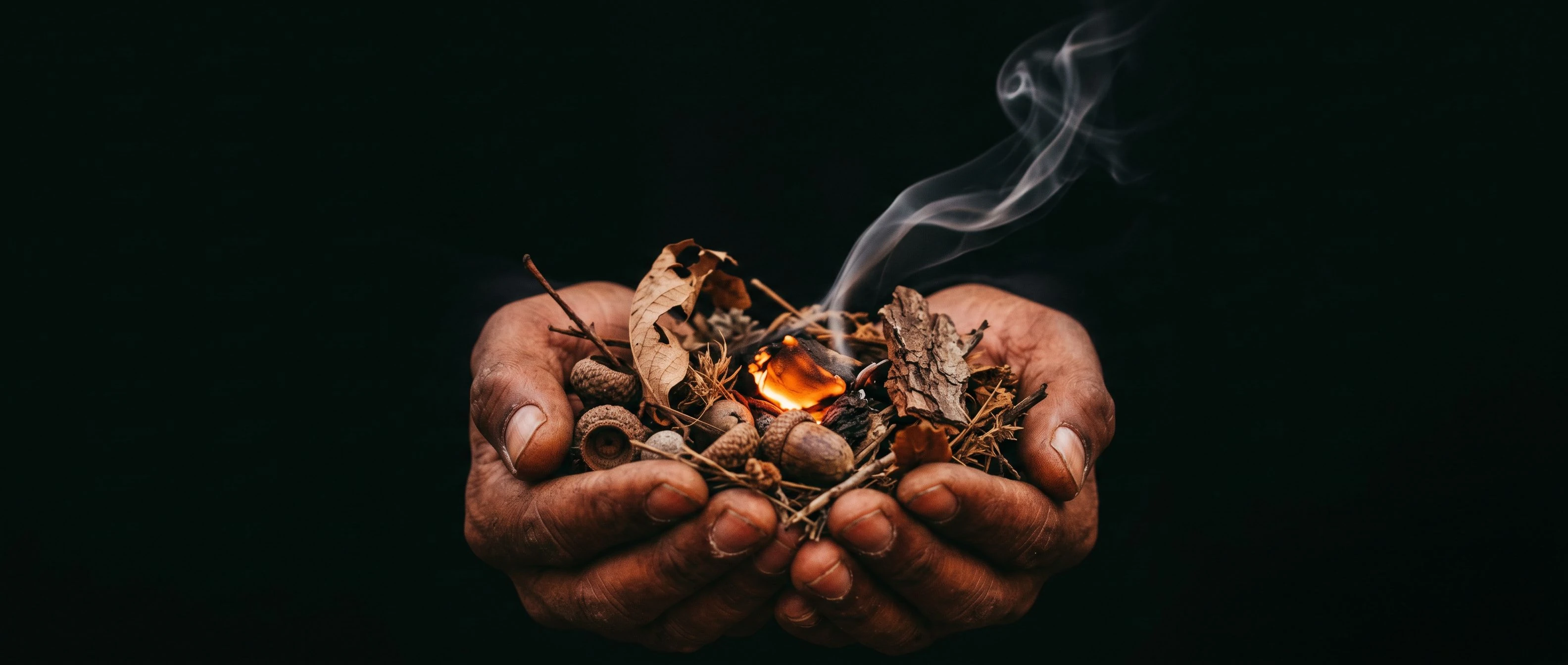
The continent's oldest food knowledge, alive tonight.
A five-course tasting menu rooted in the wild, foraged, and ceremonial cuisines of indigenous African traditions. Forty covers. Tribeca, Manhattan.
Reserve Your TableEvery African restaurant in this city tells you a story about America. Asha tells you the original.
There is no diaspora lens here. No fusion compromise. No pan-African shorthand that trades depth for familiarity.
Asha's tasting menu is built from documented, living culinary traditions sourced across the continent: wild-foraged ingredients, open-fire technique, fermentation knowledge, and ceremonial preparation methods that predate every recipe book in print. Each course is a translation, not an interpretation. The wild interior of Africa has never been this close to a Tribeca cobblestone. It is here now.
Five courses. Five traditions. One unbroken line from the wild interior to your table.
Each course names its source tradition, its foraged element, and the fire or fermentation that transforms it. This is not a dish list. It is a passage.
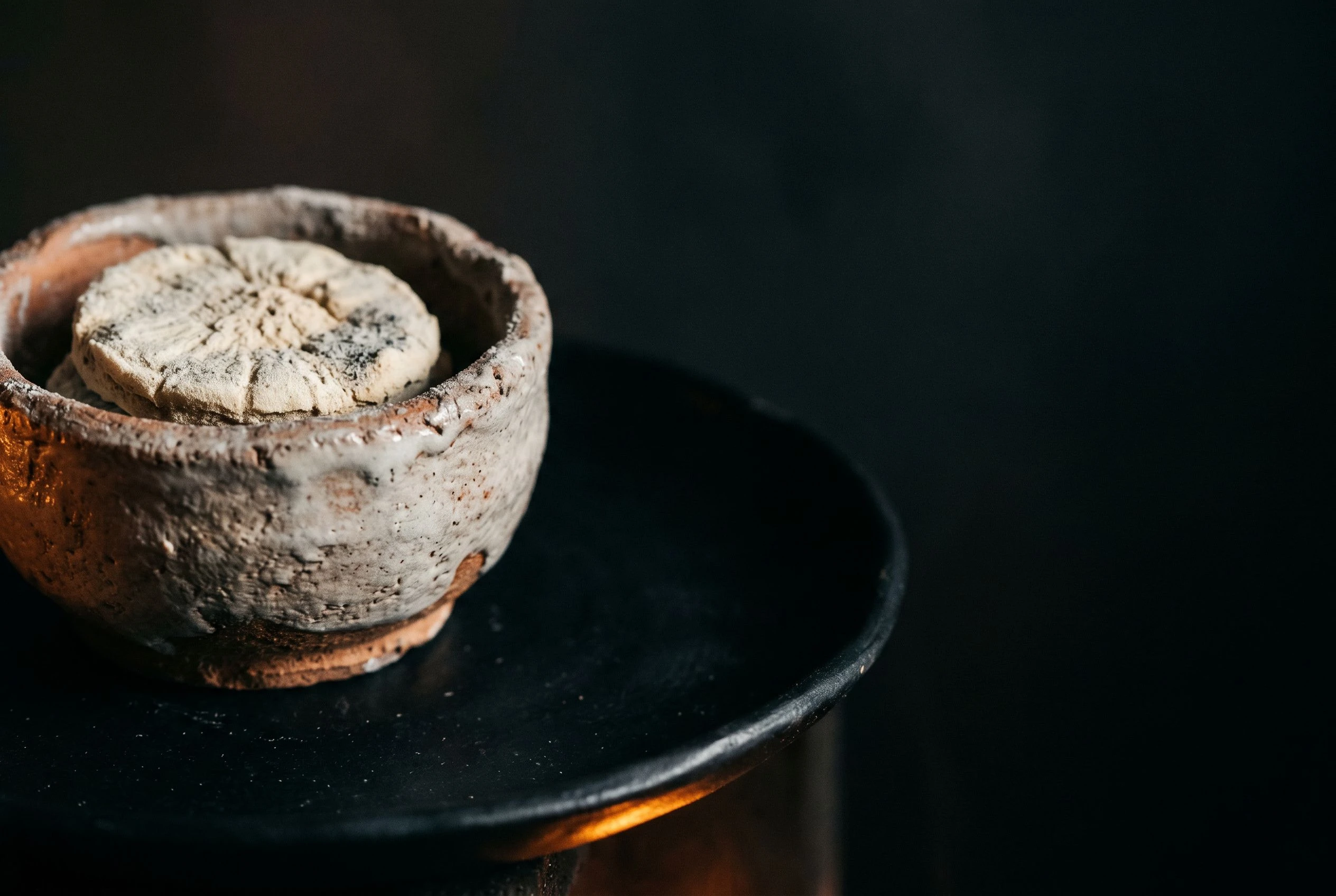
The Opening: Baobab and Ash
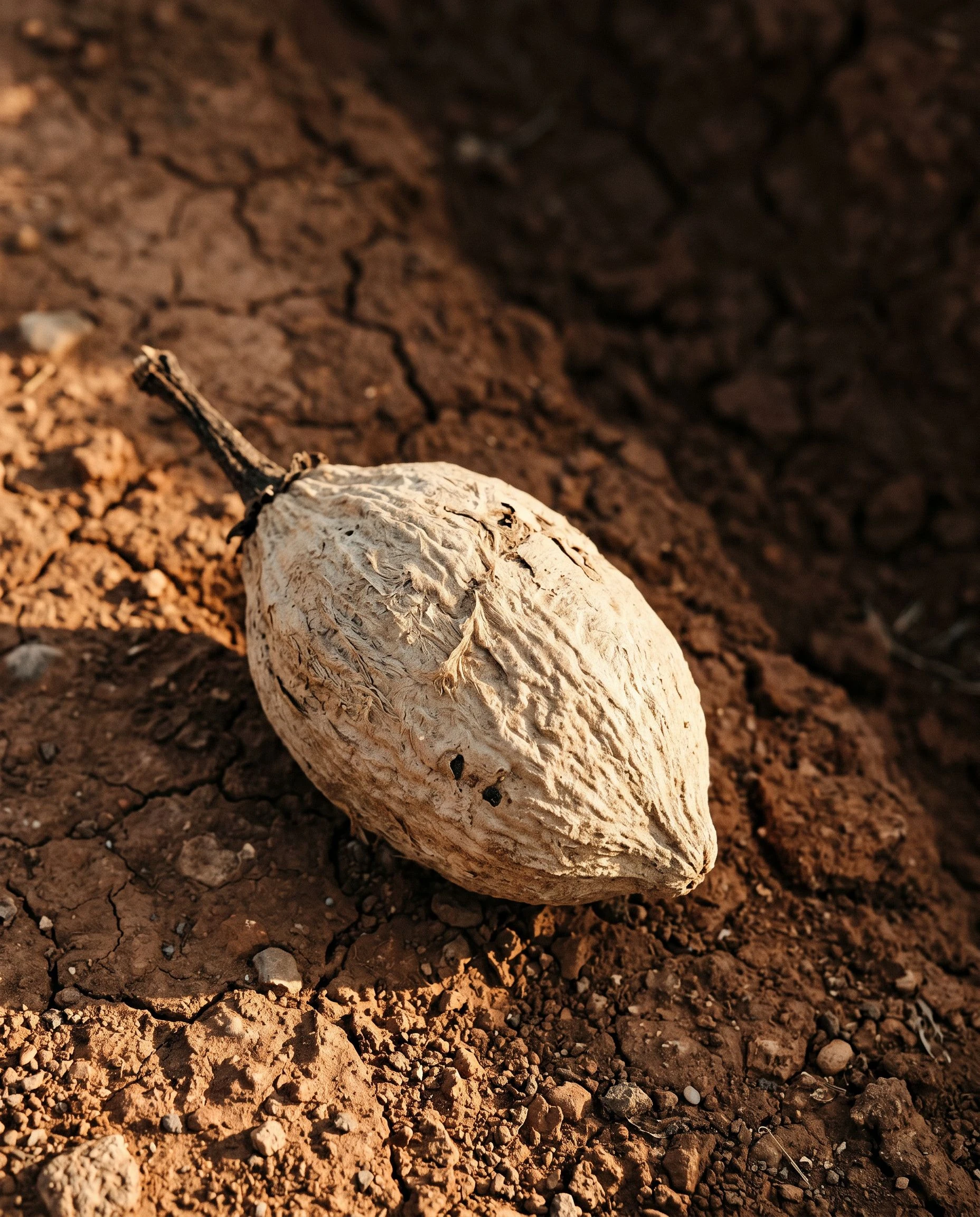
Tradition: Rooted in the Hadza foraging traditions of northern Tanzania, one of the last hunter-gatherer peoples on earth, for whom the baobab is both sustenance and sacred marker.
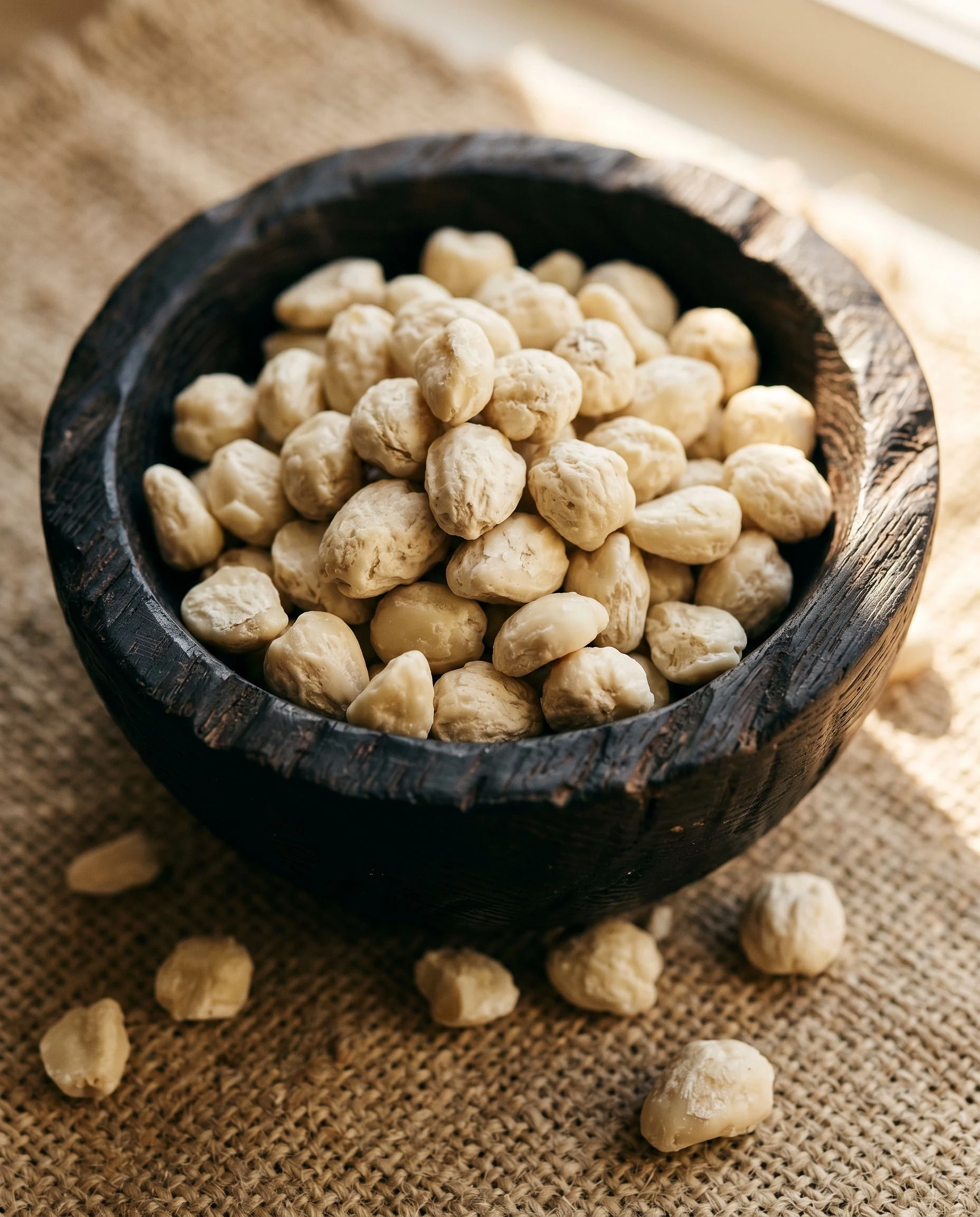
Ingredient: Baobab: hand-harvested, stone-ground into a tart, mineral-dense paste; finished with an ash glaze drawn from burned acacia wood.
Technique: Cold fermentation; ash glaze; raw-clay vessel service.
Pairing: Marula flower water, lightly carbonated: drawn from the same savannah the baobab grows in.
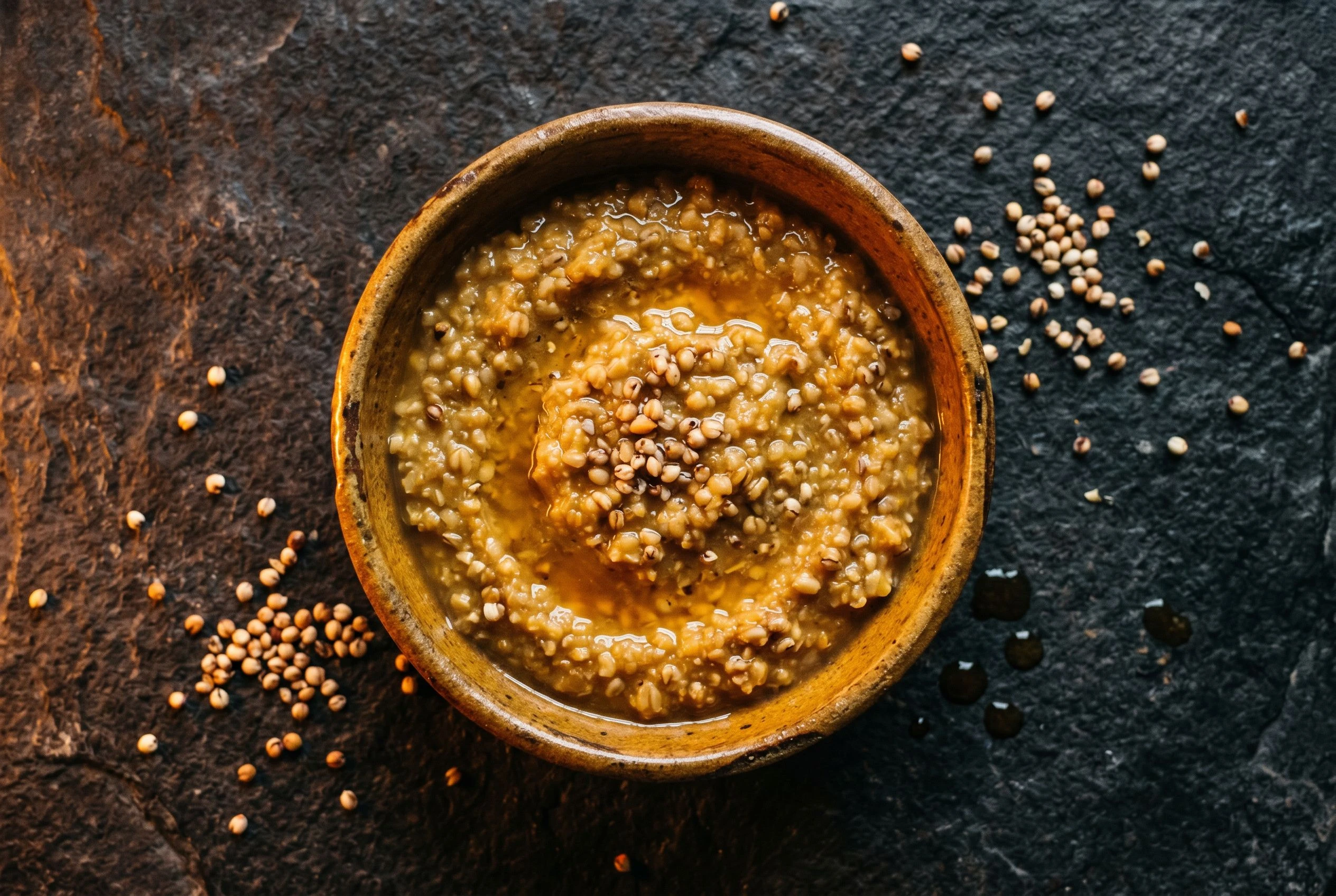
The Descent: Fermented Sorghum
Tradition: Rooted in the Zulu and Ndebele brewing traditions of southern Africa, where fermented sorghum, umqombothi, marks gathering, ceremony, and the transition between seasons.
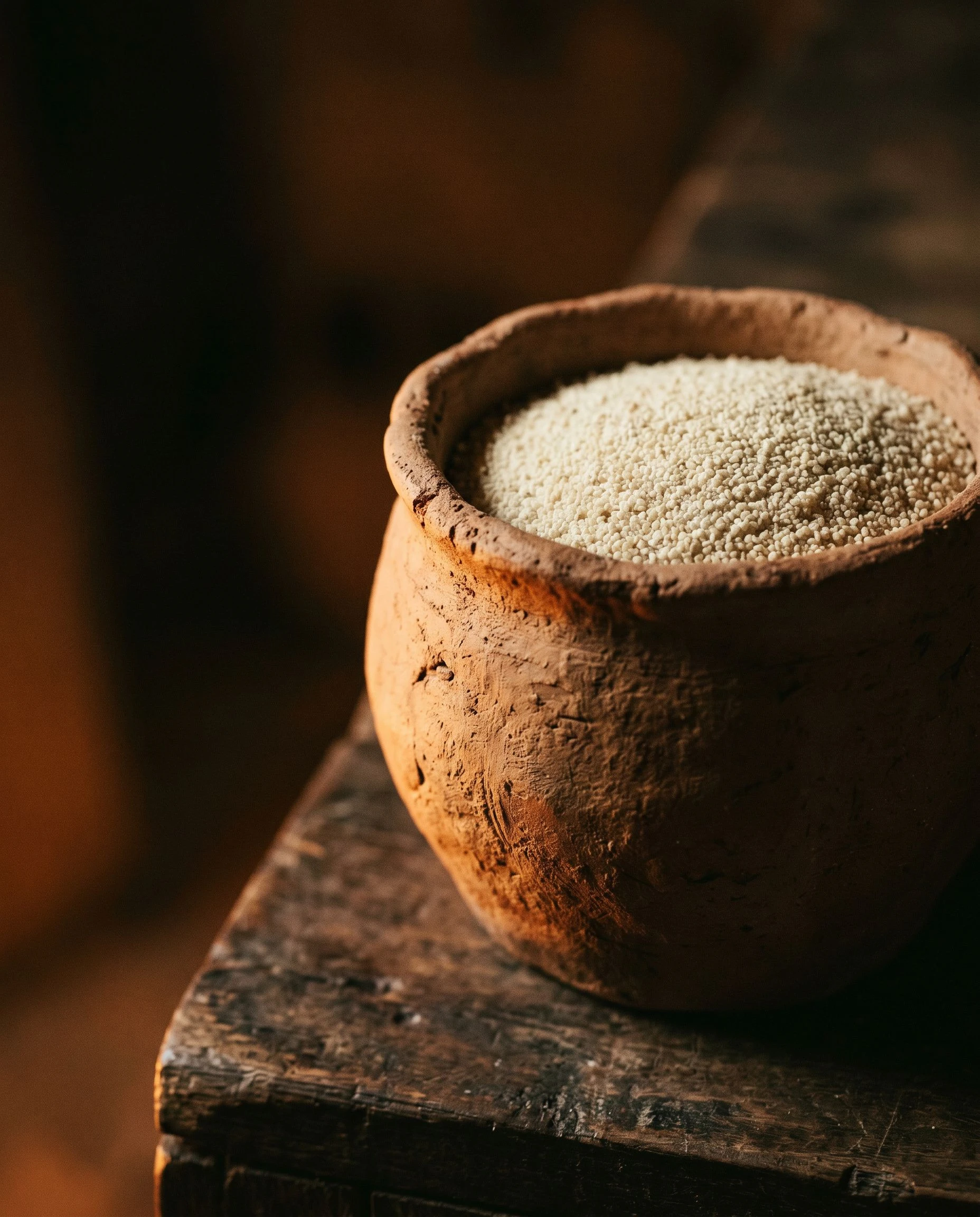
Ingredient: Heirloom sorghum, wild-fermented over seventy-two hours; plated in raw ceramic as a warm, cultured grain with a depth that reads like soil and stone.
Technique: Wild fermentation; open-fire reduction; raw ceramic plating.
Pairing: Umqombothi reduction cocktail: barely alcoholic, earthy, ancient.
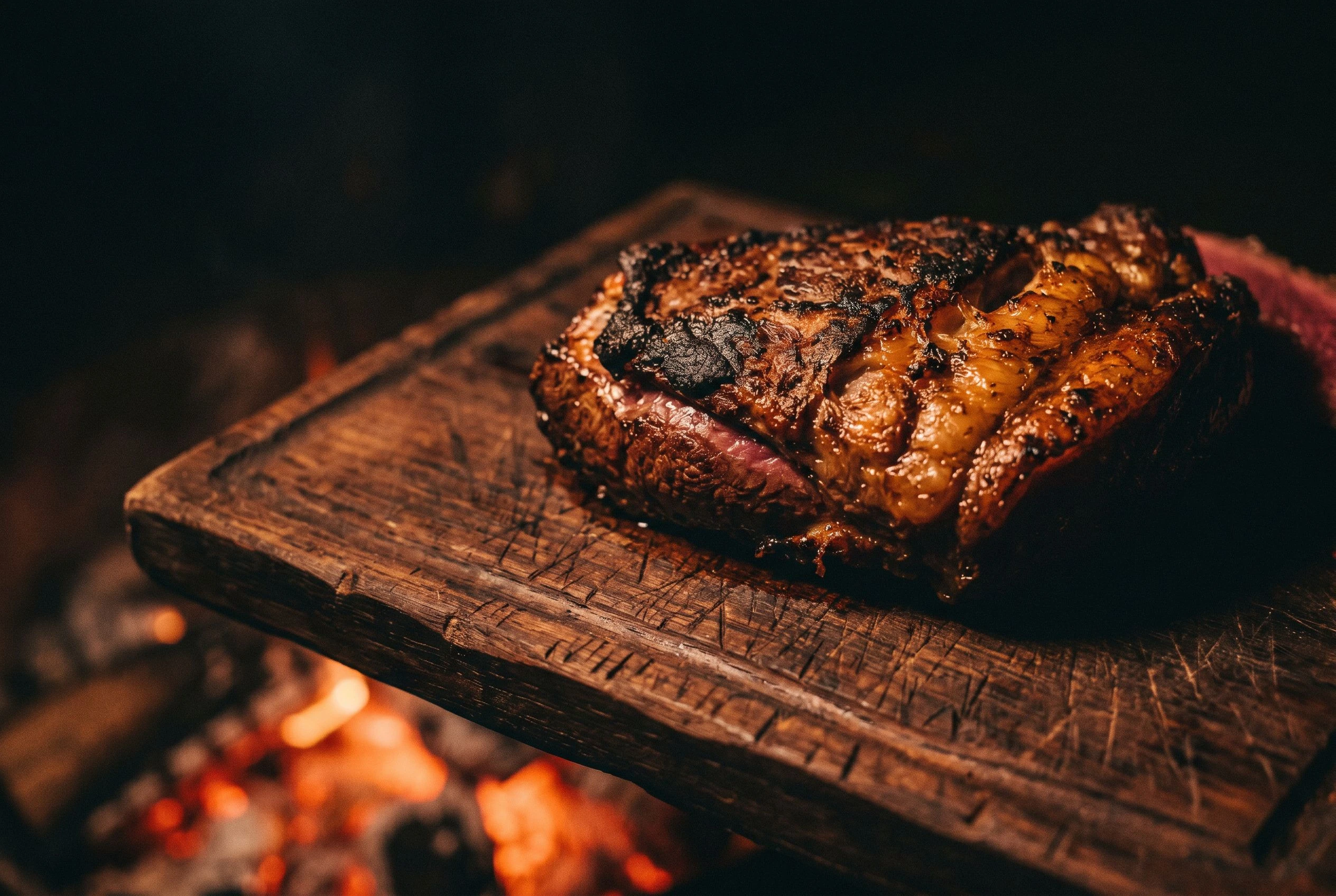
The Burning Ground: Wild-Fire Game
Tradition: Rooted in the San (Bushmen) fire-hunting traditions of the Kalahari, where protein is cooked directly in flame, without mediation, and the char is part of the flavour's meaning.
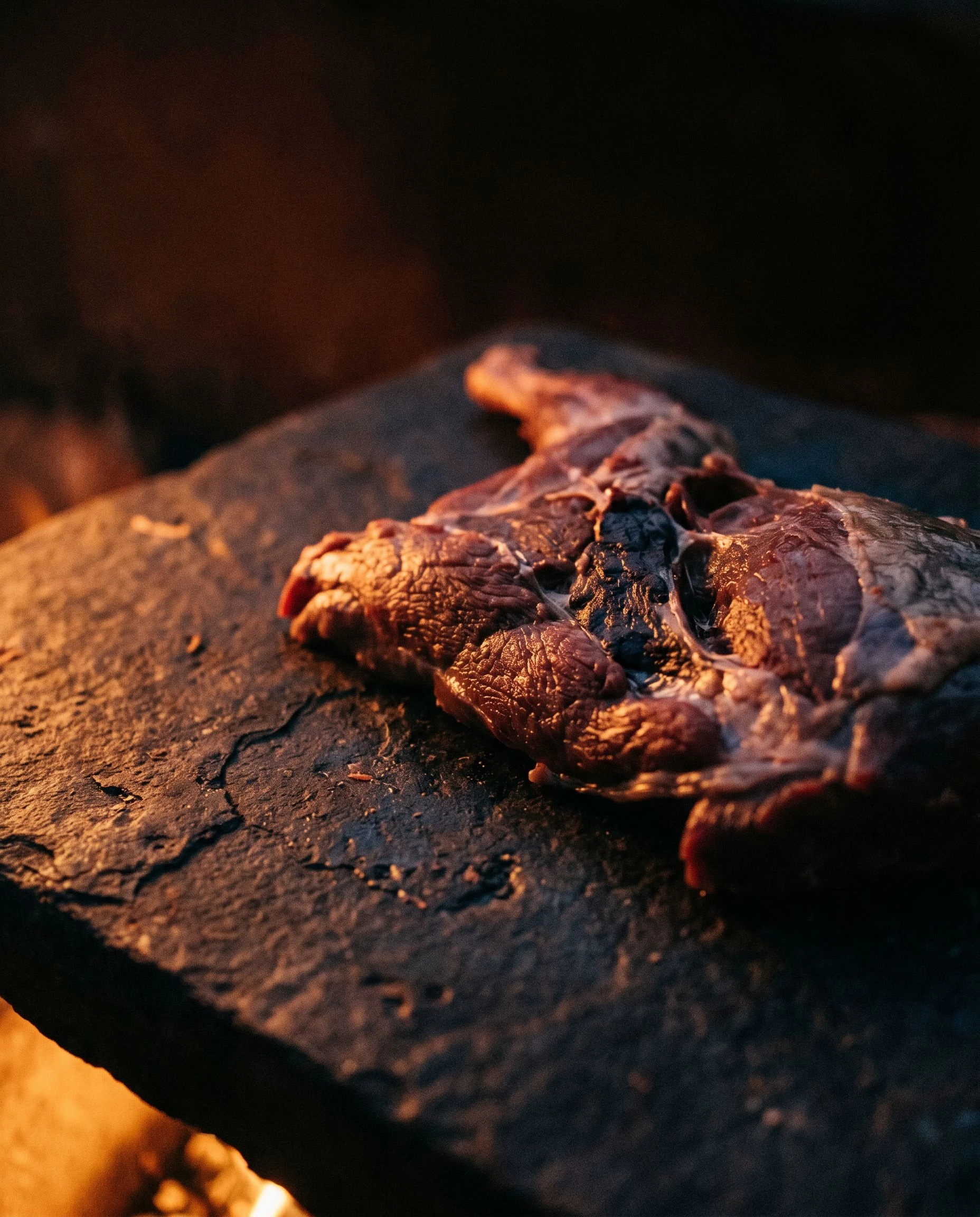
Ingredient: Ethically sourced wild game (kudu or springbok, seasonally determined) slow-cooked directly over open flame; carved on a single piece of aged wood at the table.
Technique: Direct-flame; live-fire reduction; no fat added, only smoke.
Pairing: Rooibos and wild camphor leaf spirits: the dry air of the Kalahari in a glass.
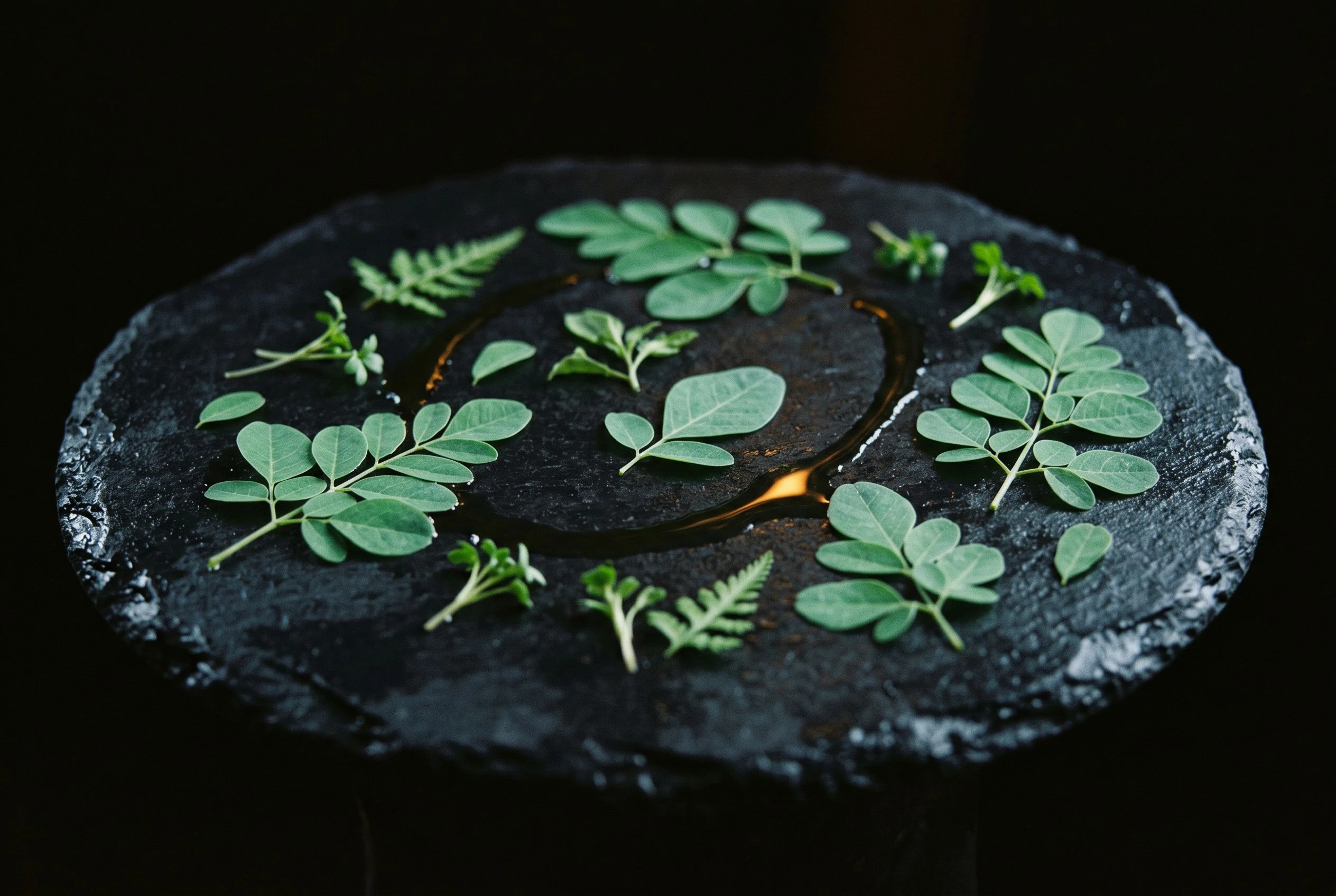
The Green Interior: Moringa and Foraged Leaf
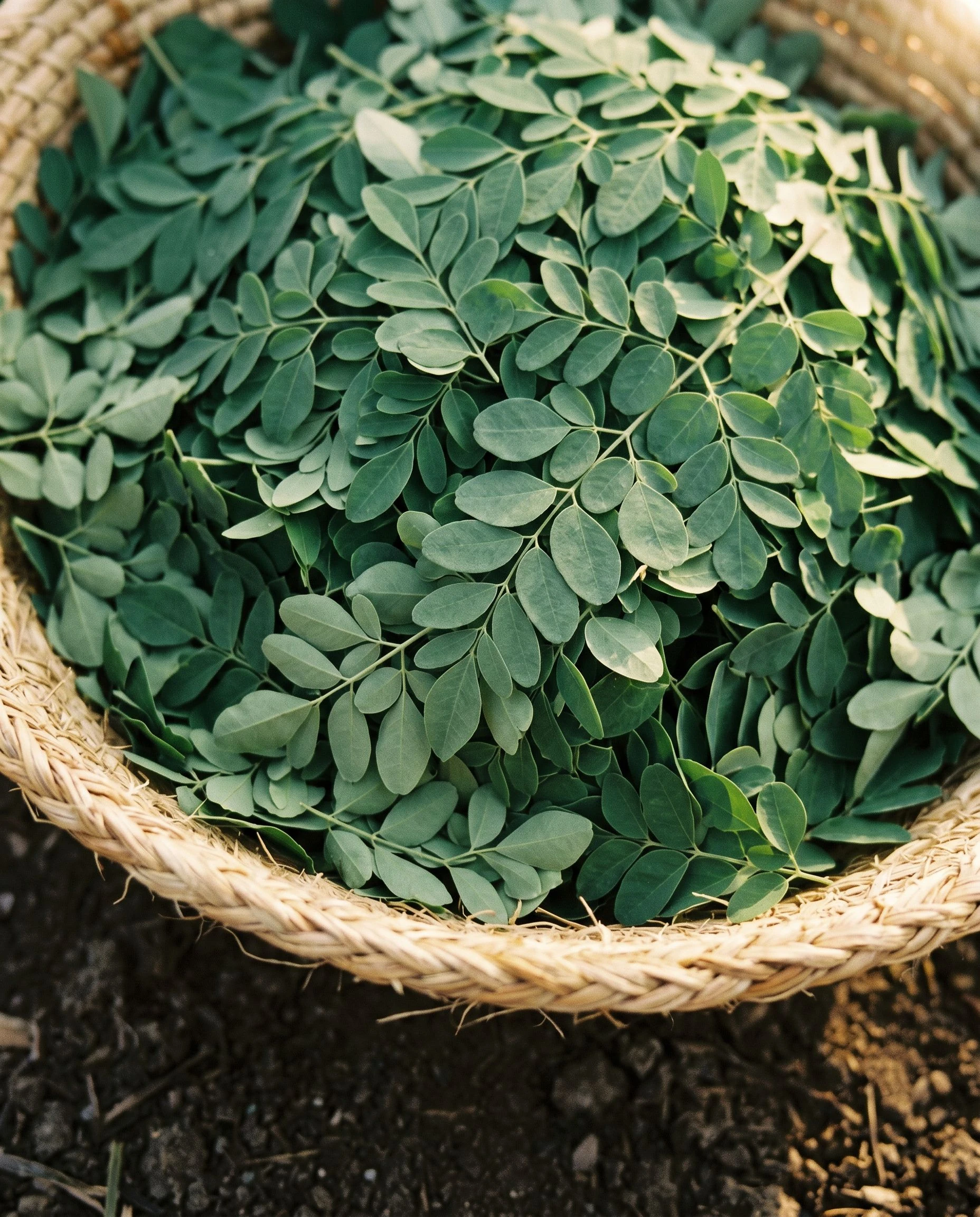
Tradition: Rooted in the gathering traditions of the Luo and Kikuyu peoples of East Africa: the moringa, the "miracle tree", has fed and healed communities for centuries before the word superfood existed.
Ingredient: Fresh moringa leaf, foraged cultivated green, and a cold-pressed moringa oil; plated with precision on dark volcanic stone with a single reduction line.
Technique: Cold press; minimal heat; stone-plate service: preserving the living quality of the botanical.
Pairing: Hibiscus and baobab leaf tisane: tart, floral, arresting.
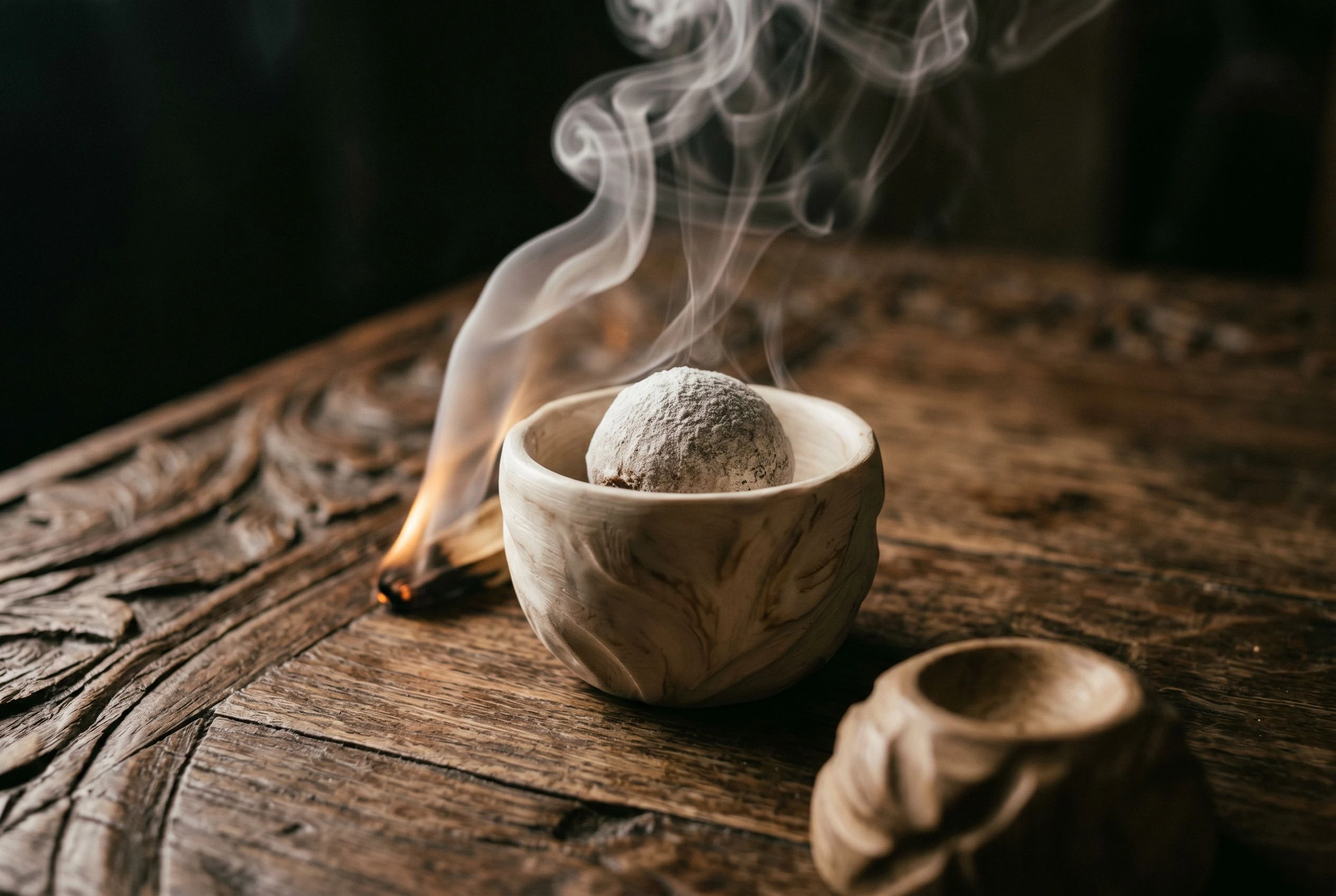
The Return: Ceremony Course
Tradition: Rooted in the closing-fire rituals of multiple sub-Saharan traditions: the moment when the meal becomes memory, and the group acknowledges what has passed.
Ingredient: A closing course built around smoked honey, teff, and an ash-mineral element; presented in a hand-carved vessel with a brief rise of cold smoke at the table.
Technique: Cold smoke; smoked-honey caramelisation; carved-vessel service.
Pairing: Ethiopian tej: honey wine, amber and ancient.
The ingredients are not imported inspiration. They are the source.
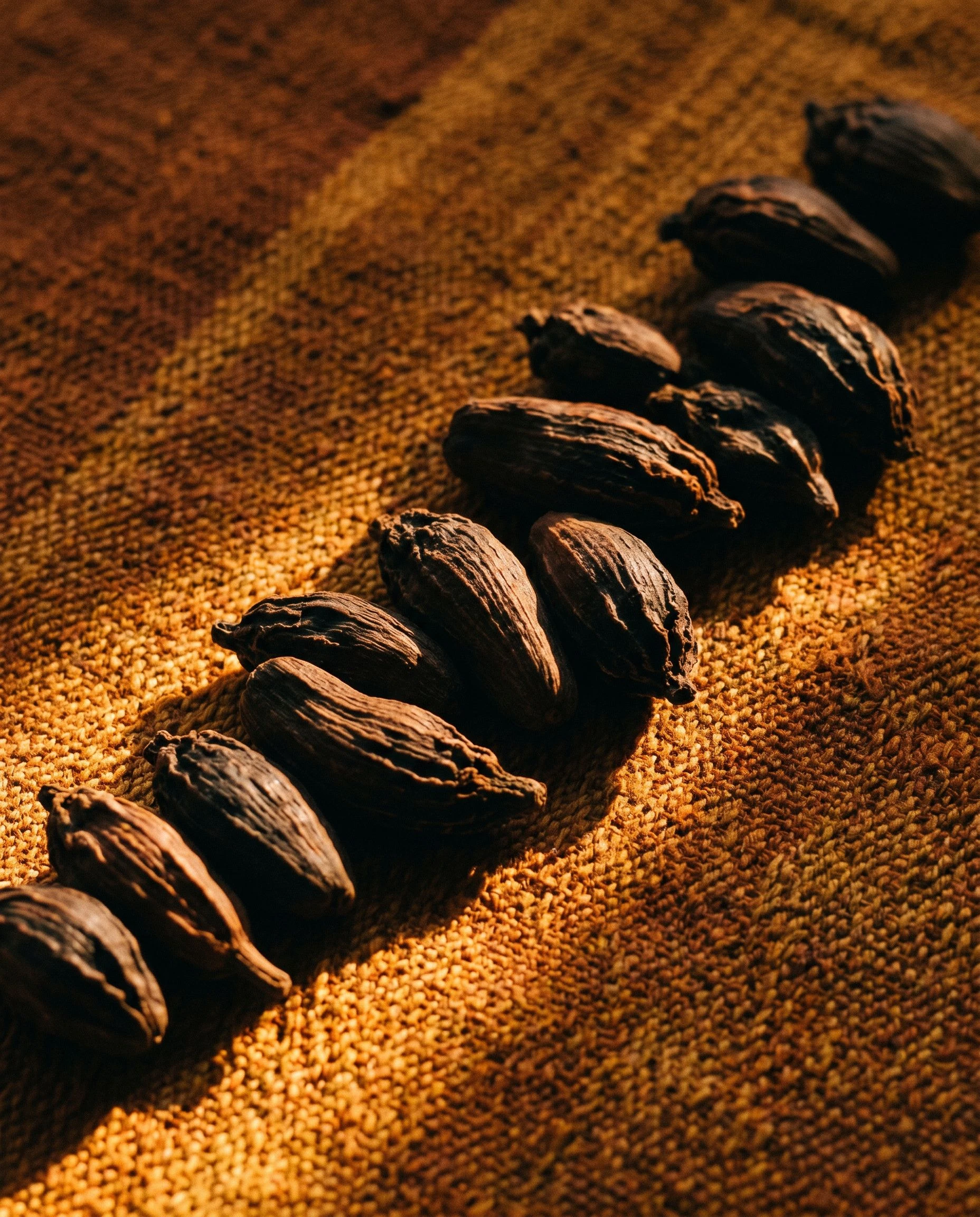
Before the fire, before the plate: the continent. Each ingredient below is documented, named in its originating tradition, and brought to this table without approximation.

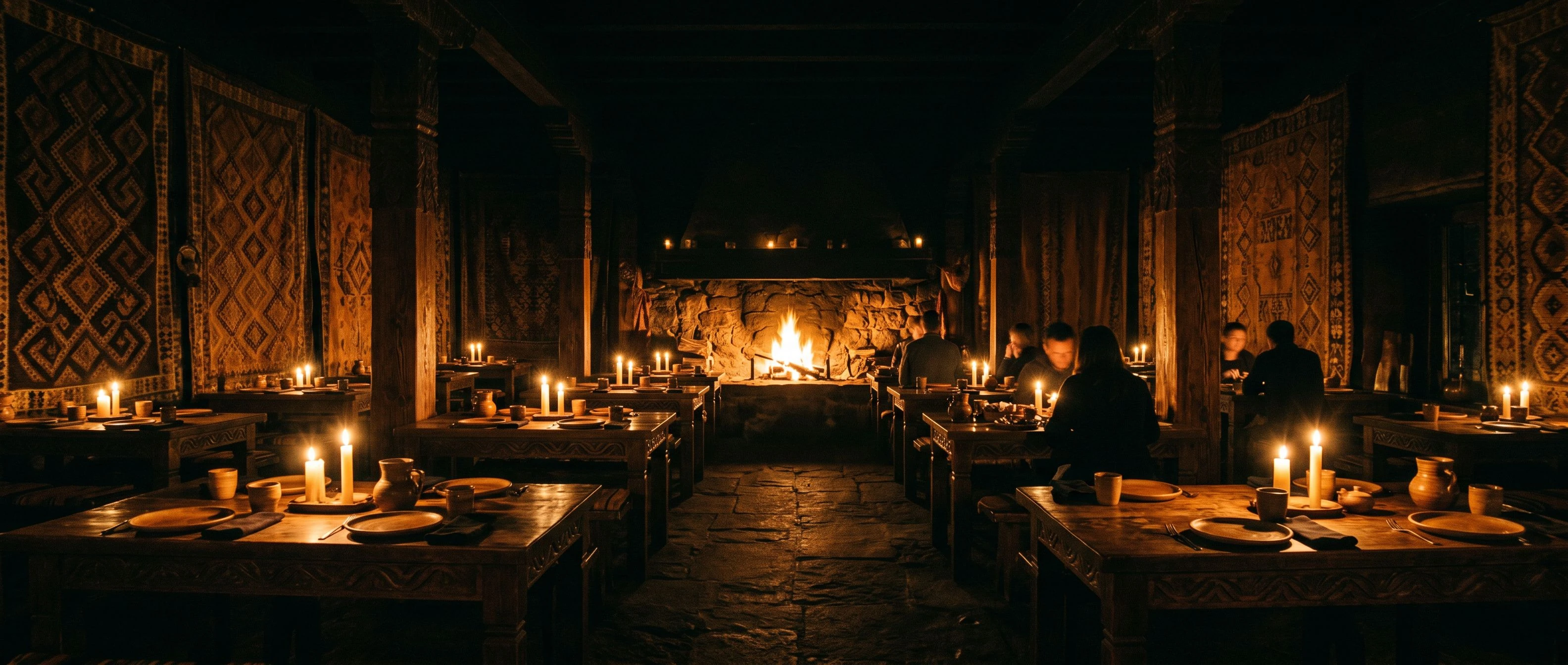
The room is not a backdrop. It is part of the ceremony.
Fire-lit. Hand-carved. Woven textile walls. Forty covers only.
Reserve Your TableBring your most important guests somewhere no one has taken them before.
Asha's private dining space seats 20 to 80 guests. The tasting menu, the botanical cocktail program, and the fire-ceremony atmosphere are all remade around your event.
This is not a buyout of the main room with a different centerpiece. It is a separate space, built for a single table and a single occasion: designed for the kind of event that remains a reference point for years after it happens. Corporate dinners, milestone celebrations, client evenings, and cultural gatherings that demand more than a private room at a recognizable address.
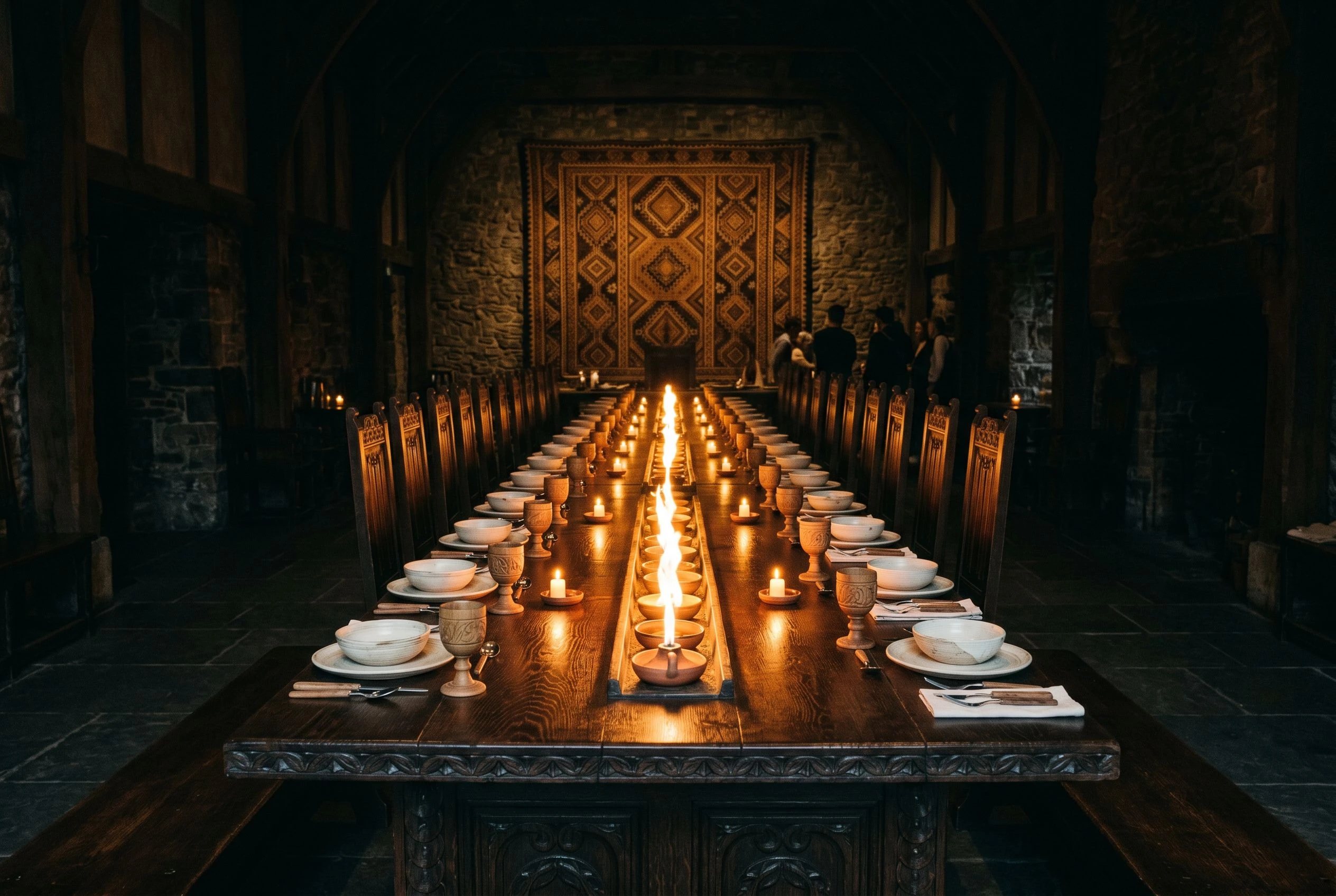
20 to 80 guests, seated
A dedicated private space designed for the full range: intimate board dinners to large-format corporate gatherings.
Custom tasting menu and cocktail program
Every course and every pour curated specifically for your event, in consultation with our culinary team. No set packages; no pre-fixed standard offering.
Full AV support and dedicated service team
Presentation capability, dedicated event service staff, and the full fire-ceremony atmosphere: not a conference room with tablecloths.
Begin your inquiry
The press found it first. Now you know where to go.
"A tasting menu that makes most of Manhattan's African cooking look like a tourist-facing shorthand. Asha goes deeper than any restaurant in the city has dared: deeper into the continent, deeper into the ingredient, deeper into the fire."
Eater NYC
Cuisine
"The room itself is a kind of argument: dark, carved, breathing with textile and ember light. You forget, halfway through the second course, that you are in TriBeCa."
Condé Nast Traveler
Atmosphere
"The private dining experience at Asha has become, in under a year, the most discussed client dinner in several of the law firms and finance houses we cover. That is a very specific form of influence."
New York Times Dining
Private events
Forty covers. One sitting. The continent is ready.
Tasting menu only. Seasonal, documented, and alive: not the same menu you will find when you return, because the continent does not repeat itself.
Evenings at Asha book two to three weeks in advance. Walk-in availability is rare and unguaranteed. The act of reserving is the act of crossing.
Tasting menu only. Forty covers per evening. No a la carte available.
Planning a private event? Begin your inquiry here.Frequently Asked Questions
Is Asha a tasting menu only, or can I order a la carte? +
Asha serves a five-course tasting menu only. There is no a la carte option at any service. The menu is determined by the season, the available wild-foraged ingredients, and the traditions from which each course is sourced: it changes when those conditions change, not on a fixed calendar. If you have specific dietary requirements, contact us before booking and we will tell you honestly what we can accommodate.
How far in advance do I need to reserve? +
Most evenings book two to three weeks out. We hold a small number of covers for same-week reservations, but availability at that range is rare. If you are planning around a specific occasion, reserve the moment the date is confirmed. Walk-in seating is occasionally available at the bar; it is not guaranteed and cannot be held.
What is the price of the tasting menu? +
The five-course tasting menu is priced per person; current pricing is displayed in the Resy reservation flow at booking. Optional botanical cocktail pairing is available as a supplement. Prices reflect the full ceremony: the sourcing, the tradition, the preparation, and the forty-cover scale that makes the experience what it is.
I do not recognise most of these ingredients. Will the menu be explained at the table? +
Yes. Every course arrives with a brief spoken introduction from your server: the tradition it comes from, the ingredient at its centre, and the technique that transformed it. You will not be handed a glossary card or left to decode the plate. Understanding is part of the ceremony. If you want to go deeper before you arrive, the tasting journey section of this page walks each course in full.
Can Asha accommodate dietary restrictions? +
The menu is built around wild, foraged, and fire-cooked ingredients: it is naturally free of many common allergens, and it does not lean on the components most fine-dining menus rely on. That said, the tasting menu is a fixed progression, and significant substitutions can compromise the passage we have designed. Contact us before booking with specifics and we will give you an honest answer rather than a reassuring one.
How does private dining at Asha work, and what is the minimum spend? +
Private ceremonies at Asha are built from scratch around your event: the space, the tasting menu, the cocktail program, and the service format are all customised. The space accommodates 20 to 80 guests, seated. Minimum spend and availability are confirmed through the inquiry process, not published as a fixed figure, because no two events at Asha are the same. Use the private dining inquiry form and our events team will respond within one business day.